Digital Forensics Explained: How Investigators Find the Truth in 2026

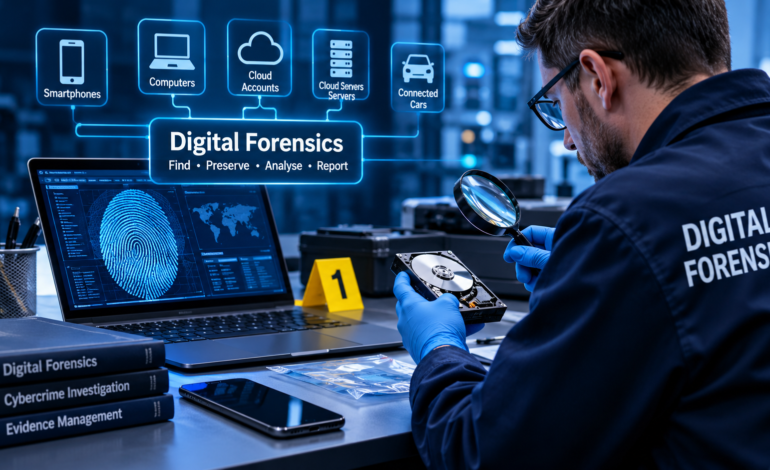
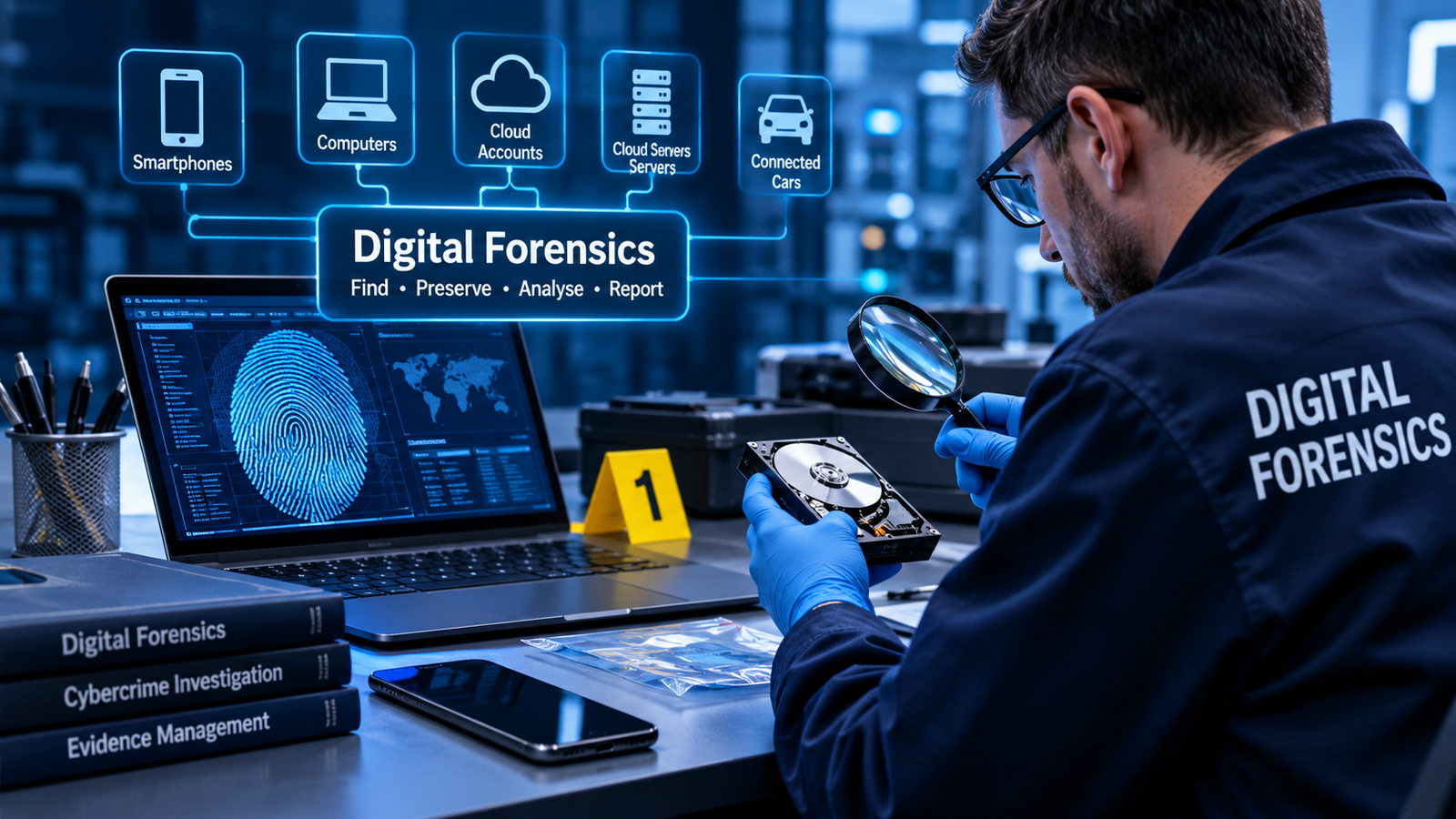
Digital forensics is the process of finding, protecting and examining digital evidence so it can be trusted in court or in a company investigation. Think of it as detective work for phones, laptops, cloud accounts and smart devices.
If you run a business, work in IT, or are just curious, this guide explains how it works today. It also covers what most guides skip: what you should do in the first hour after something goes wrong.
What does digital forensics actually do?
Digital forensics answers three questions. What happened? Who did it? Can we prove it?
The proof part matters most. Evidence must be handled so nobody can claim it was changed. That is what separates forensics from simply “looking through a computer”.
It can also clear people. Digital evidence can show guilt, but it can show innocence too.
You will see digital forensics used in:
- Criminal cases, such as fraud, stalking and cybercrime
- Data breaches and ransomware attacks
- Workplace investigations, such as data theft by an employee
- Civil disputes, such as contract or divorce cases
How a digital forensics investigation works
Different guides split the process into four, five or six phases. The idea is always the same. Here is the simple version:
- Identify. Work out which devices and accounts might hold evidence.
- Preserve. Stop anything from changing. Investigators work on copies, never the original.
- Collect. Make an exact copy of the data. A “hash” (a digital fingerprint) proves the copy matches.
- Examine. Search the copy for files, messages, logs and deleted items.
- Analyse. Build a timeline. Connect the dots between devices and accounts.
- Report. Explain the findings in plain language that a judge, a manager or an insurer can follow.
Through all six steps runs the chain of custody. This is a written record of who handled the evidence, when, and why. One gap in it can make good evidence useless.
How long does it take? One industry guide says urgent cases can produce first findings in 48 to 72 hours. A large breach can take weeks or months.
The big shift: evidence has left the hard drive
Older guides still talk about seized computers and hard drives. That is no longer the full picture.
Cellebrite’s 2026 Industry Trends Report surveyed 1,200 practitioners in 63 countries. It found that smartphones are the top source of digital evidence, at 97%.
Cases now also involve cloud accounts, smart devices and connected cars. In October 2026, Europol published a Digital Forensics: Gap Analysis report. Its message is blunt: digital evidence is getting harder to collect, understand and verify.
Cloud evidence can disappear fast. A cloud server or container can be shut down in seconds, and its live data goes with it. So modern investigators capture the most short-lived data first. This idea is known as the “order of volatility”.
Where digital evidence comes from today
| Source | What it can hold | Main challenge |
| Smartphones | Messages, photos, location, app data | Strong encryption and constant updates |
| Computers | Documents, browser history, deleted files | Large drives take time to copy |
| Cloud accounts | Emails, files, login records | Data sits in other countries; access rules apply |
| Cloud servers and containers | Live activity and logs | Can vanish when shut down |
| Smart devices and cars | Location, usage and sensor data | Many different formats, few standard tools |
AI in digital forensics: a helper, not a judge
Investigators face mountains of data. AI helps them sort it.
According to the 2026 State of Enterprise DFIR Report, 68% of digital forensics and incident response professionals already use AI in their work.
But AI makes mistakes. Europol’s advice is to treat AI output as a lead until a human checks it. Good teams also record how an AI result was verified. A judge will ask.
The UK angle: why accreditation matters
In England and Wales, the Forensic Science Regulator sets quality standards for forensic work in the criminal justice system. Digital forensics labs are expected to hold ISO/IEC 17025 accreditation. For fixed-site lab work, this has applied since October 2017, and for work at the scene since October 2022.
Not every case is a criminal one. But the lesson helps everyone. If you hire a forensics provider, ask whether they are accredited and how they validate their tools. A confident provider will answer easily.
What to do in the first hour after a cyber attack
Most people only meet digital forensics when something has gone wrong. The first hour decides how much evidence survives. Here is a calm checklist:
- Do not wipe or reinstall anything. It is tempting. It also destroys the evidence.
- Disconnect, don’t panic. Unplug the network cable or switch off Wi-Fi to stop the spread. Many experts advise against powering devices off, because memory (RAM) holds short-lived evidence. Ask your forensics provider if you are unsure.
- Screenshot everything. Ransom notes, strange emails, error messages. Do not delete them.
- Write a timeline. Note what you saw and the exact times. Memory fades quickly.
- Call your cyber insurer. Some insurers require you to use their approved forensics firms. Calling late can affect your claim.
- Change passwords from a clean device. Not from the one that was hacked.
- Check your legal duties. Under UK GDPR, a personal data breach may need reporting to the ICO within 72 hours. Take advice if you are unsure. You should also report the crime to Action Fraud. This is general information, not legal advice.
FAQ
Is digital forensics the same as computer forensics?
Not quite. Computer forensics is one branch. Digital forensics covers any digital device, including phones, cloud accounts, and smart gadgets.
What is the difference between digital forensics and DFIR?
DFIR stands for digital forensics and incident response. It includes forensics, plus stopping the attack and fixing the damage.
Can deleted files be recovered?
Often, but not always. It depends on how the device has been used since the deletion. This is another reason to stop using a device you think was compromised.
Do I need a digital forensics expert?
If the matter may go to court, involve insurance, or affect customer data, yes. Early expert help protects your evidence.
The bottom line
Digital forensics is no longer just about hard drives. It is about phones, clouds, and connected devices. It is also about careful habits, clear records and human judgment, with AI helping rather than deciding.
The best time to learn this is before an incident. Write down who you would call, and keep that list somewhere you can reach it if your systems go down.