Eczema What It Is, Why It Flares and What Actually Helps

Quick answer: Eczema is a long-term skin condition that makes skin dry, itchy, red or darker, and sore. It comes and goes in flare-ups. It is not contagious. There is no cure yet, but daily skin care and trigger control keep most people comfortable.
What is eczema?
Eczema is also called dermatitis. The most common type is atopic eczema. In the UK, it affects 10-30% of children and 2-10% of adults.
Your skin barrier is meant to keep moisture in and irritants out. In eczema, that barrier is weak. Skin dries out, and things like soap or pollen get in more easily. The result is itch, and then more itch.
It is also not contagious. You cannot catch it from someone else.
What are the symptoms?
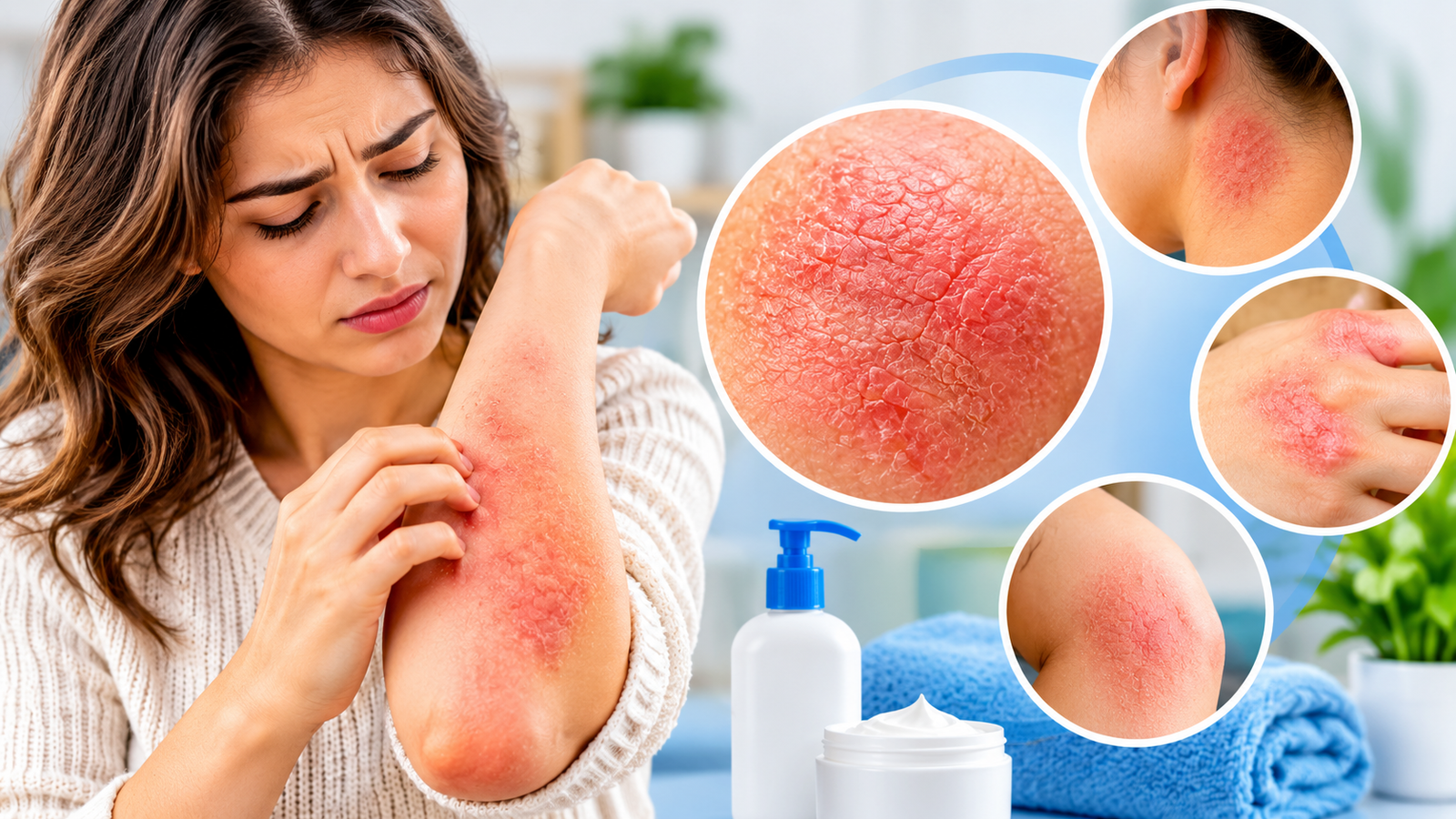
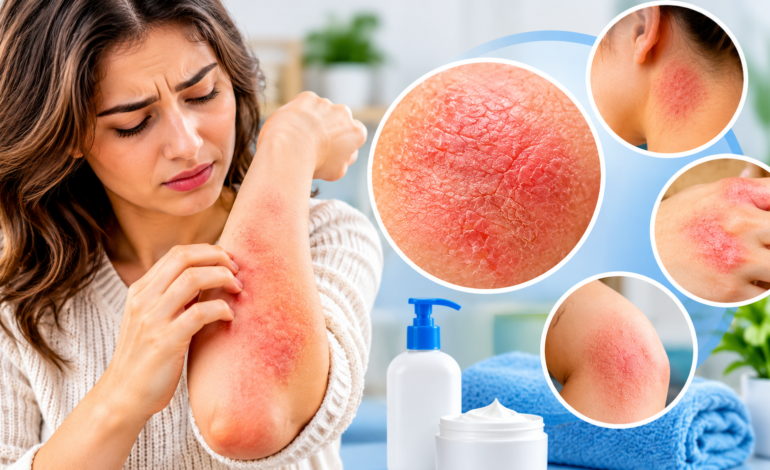
Itch is the big one. Others include
- Dry, rough, or scaly patches
- Cracked, sore skin
- Red, swollen or weeping skin
- Thickened skin from constant scratching
Eczema often shows up on the hands, inside the elbows, behind the knees, and on the face and scalp. It can appear anywhere.
On brown and Black skin, eczema may look purple, grey, or dark brown instead of red. Patches of darker or lighter skin can stay for a long time even after a flare settles. That is why “look for redness” is poor advice.
What causes eczema?
Nobody knows the exact cause. It is usually a mix of:
- Genes. Eczema, asthma, and hay fever often run in families.
- An overactive immune system. It reacts too strongly and causes inflammation.
- A weak skin barrier. Moisture escapes and irritants get in.
What triggers a flare?
Causes and triggers are different. Causes make you prone to eczema. Triggers set off a flare. Common ones:
- Soaps, bubble baths, detergents, and perfumed products
- Wool and rough fabrics
- Dust mites, pollen, and pet dander
- Cold, dry air. It strips moisture from the skin, so winter is often worse.
- Stress. It does not cause eczema but can make symptoms worse.
- Hormone changes. Some women notice flares during pregnancy or at certain points in the menstrual cycle.
Triggers differ for everyone. A simple diary of flares, products, and weather can show your pattern within a few weeks.
Daily care that works
Most people manage eczema with a routine, not a miracle product.
- Moisturise every day, even when skin looks fine. Use a thick, fragrance-free emollient.
- Keep showers short and lukewarm. Hot water dries skin out.
- Swap soap for a gentle wash or a soap substitute.
- Pat skin dry, then moisturize within a few minutes.
- Wear soft cotton and wash new clothes before wearing them.
- Keep nails short to limit damage from scratching.
Medicated creams are used for flares. Your GP or pharmacist will guide you on strength and how long to use them. Always follow their advice.
What does new research say in 2026?
This is where the science is moving.
- Antihistamine pills may not help the itch. A 2026 study found only small, clinically insignificant benefits, plus a risk of drowsiness, and the authors did not support routine use for eczema. Eczema itch works differently from allergy itch. Talk to your doctor before relying on them.
- Skin bacteria matter. A study published in April 2026 found that biologic treatment led to the near-complete disappearance of Staphylococcus aureus, a bacterium linked to worse eczema, and helped restore a healthier skin balance. Steroid creams mainly calm symptoms. Newer treatments may also change the skin environment.
- New medicines are in the pipeline. Phase 3 trials of rocatinlimab showed patients were three times more likely to see significant improvement than those on placebo. It is still in development and has not been approved by any regulator. Rademikibart also showed improvement by week 16, sustained for a year. Early results are encouraging. They are not yet something you can ask for at the pharmacy.
- More people keep eczema into the teens than we thought. Experts once believed about 60% of children grew out of it by adolescence. They now think it is closer to 35%. Long-term skin care matters.
When should you see a doctor?
See a GP if:
- Itch stops you from sleeping or affects daily life
- Home care is not working
- Skin is weeping, crusting, or has yellow crusts
- You feel hot, shivery, or generally unwell
Small, painful, fluid-filled blisters on eczema could be eczema herpeticum, a rare but serious complication. Get urgent medical help.
FAQs
Is eczema contagious?
No. It cannot pass from person to person.
Can eczema be cured?
Not yet. Treatments can help control it, and many people go long periods with clear skin.
What is the difference between eczema and psoriasis?
Eczema tends to appear in skin folds like elbows and knees. Psoriasis often causes thicker, more defined scaly patches. A doctor can tell them apart.
Does stress cause eczema?
No, but stress can trigger or worsen flares.
Can adults get eczema for the first time?
Yes. Some people get it for the first time in adulthood.
Final Thoughts
Eczema can feel exhausting, but you are not stuck with it. Most people do best with a simple routine: moisturize daily, avoid your triggers, and treat flares early. Keep a short diary to spot patterns, and don’t ignore the itch if it starts to affect your sleep.
Research is also moving fast. New treatments are being tested, and doctors now understand much more about the skin barrier and skin bacteria. So if your current plan isn’t working, speak to your GP. Better options may be available.
Small habits done every day beat big fixes done once. Start with one change this week, such as a fragrance-free moisturizer, and build from there.
This article is for general information and is not medical advice. Speak to your GP or pharmacist about your own skin.