Business Credit Score UK: What It Means and How to Raise It

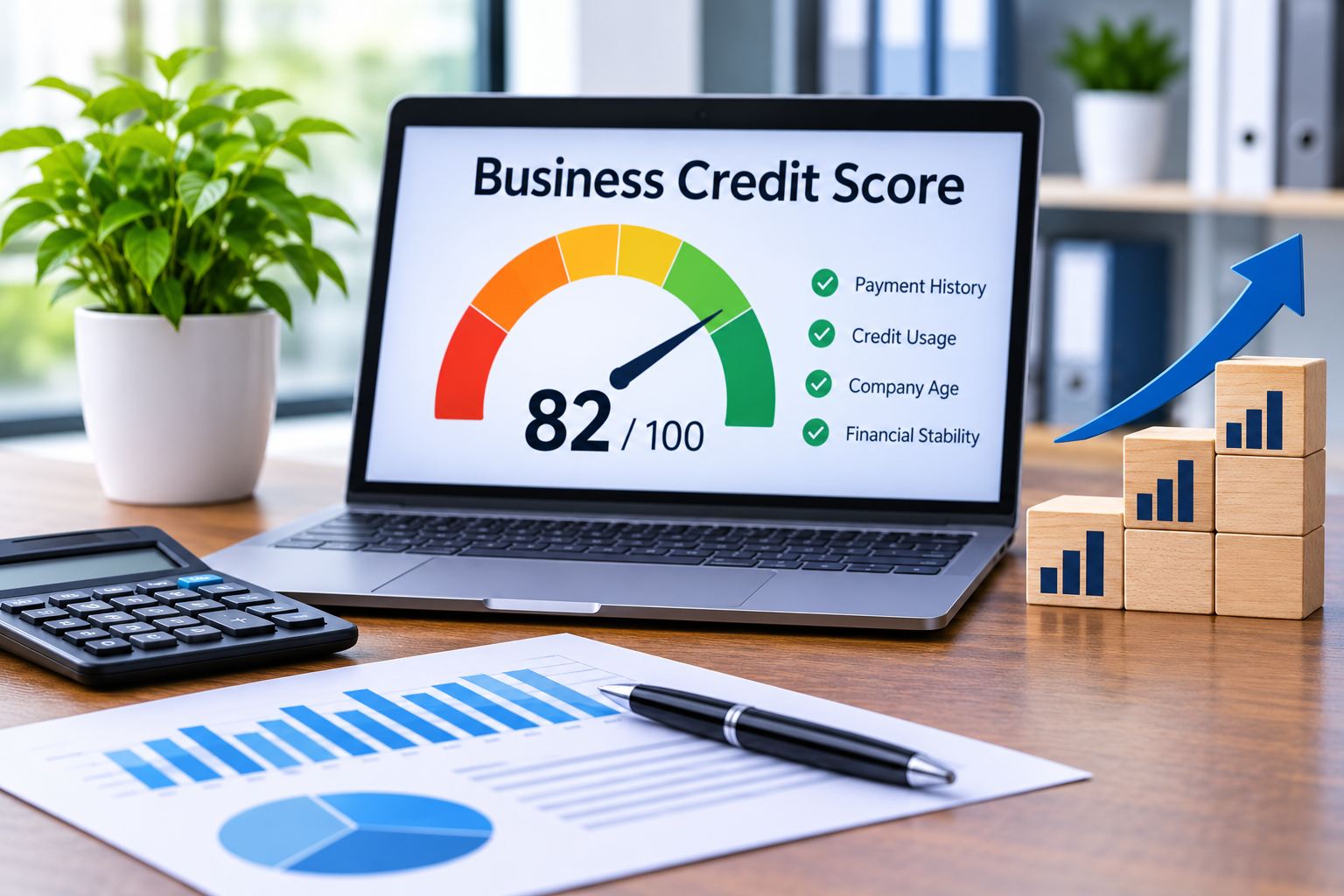
Quick answer: A business credit score is a number, usually between 0 and 100, that shows how risky your company is to lend to or trade with. Agencies like Experian, Equifax, Creditsafe and Dun & Bradstreet work it out. A higher score means lower risk. Each agency uses its own formula, so your score can change from one to the next.
What Is a Business Credit Score?
Think of it as a report card for your company’s money habits. It tells others how likely you are to pay on time.
Banks check it before they lend. Suppliers check it before they offer 30 days to pay. Even big clients may look at it before they sign a contract.
Here is the part many owners miss. A limited company’s credit file is not private. Anyone can look it up. Your personal score stays private. So a weak score can cost you deals you never knew you lost.
Also note that the UK government does not issue business scores. Private agencies do.
Why Your Score Looks Different at Every Agency
There is no single UK standard. A 70 at one agency does not mean the same as a 70 at another.
| Agency | Typical scale | What it shows |
| Experian | 1 to 100 | Overall risk. 81 and above is often seen as good. |
| Creditsafe | 0 to 100 | Chance of insolvency, plus a suggested credit limit. |
| Dun & Bradstreet | 0 to 100 | Payment and failure risk. 80 and above is usually strong. |
| Equifax | Own risk bands | Payment habits and company health. |
Scales and bands change over time, so always read the guide that comes with your report. Check at least two agencies. One alone can give you a false picture.
What Actually Moves Your Score
Agencies do not share exact formulas. But these factors come up again and again:
- Payment record. Paying suppliers late hurts. Missed payments and defaults hurt more.
- Court judgments. A County Court Judgment (CCJ) is a big red flag.
- Filing on time. Late accounts or a late confirmation statement at Companies House look careless.
- Company age and size. Older, steadier firms usually score better.
- Credit use. Maxing out your limits suggests stress. Many experts suggest staying below about half.
- Too many applications. Lots of credit searches in a short time can look desperate.
- Your sector. Some industries carry more risk than others.
Late payment is a daily problem. A 2025 Coface survey found 90% of UK firms were paid late in the past year, by 32 days on average. That is why cash flow and credit scores are linked. When customers pay you late, you pay your own bills late too.
Sole Traders and Directors: The Part Most Guides Skip
Sole traders do not have a separate business score. Lenders look at your personal credit file instead.
Limited company directors face a double check. Many lenders look at the company file and the director’s personal file. If your company is new, the director’s file often matters more, because the company has little history yet.
So a messy personal record can slow down a business loan, even when the company looks healthy. Fix both.
Your 30-Day Plan to Improve It
Scores move slowly. Payment history takes months to build. But you can make a real start in a month.
Week 1: Check where you stand. Pull reports from two agencies. Checking your own score does not harm it. Registered directors can get a free Creditsafe report, and Experian offers directors a free trial.
Week 2: Fix mistakes. Look for a wrong address, an old director, or a debt that is not yours. Ask the agency to correct it.
Week 3: Tidy your filings and payments. File accounts early. Set reminders for supplier invoices. Pay on time, or a few days early.
Week 4: Ease the pressure. Pay down credit balances. Close unused credit lines. Pause new credit applications. Set up score alerts so you spot changes fast.
Then repeat the check every quarter.
FAQs
What is a good business credit score in the UK?
On a 0 to 100 scale, 80 or above is usually seen as low risk. But each agency sets its own bands. Always check the key on your report.
Is my business credit score public?
For limited companies, yes. Suppliers, lenders and other firms can view it. Your personal score is private.
Does checking my business credit score lower it?
No. Checking your own score is a soft check and does not harm it.
How can I check my business credit score for free?
Registered directors can ask Creditsafe for a free report. Experian and Dun & Bradstreet offer free trials or limited free previews. Paid plans add full detail and alerts.
Can my personal credit affect my company?
Yes. Lenders often check the director’s file too, especially for young companies or loans that need a personal guarantee.
The Bottom Line
Your business credit score is an asset you cannot see on the balance sheet. It shapes your loan rates, supplier terms and even who will work with you.
Check it with two agencies. Fix errors fast. Pay on time and file on time. Small habits, kept up for a few months, add up to a stronger score.