Causes of Bloating After Eating: 7 Reasons and When to Worry

Last updated 10 November 2026. This is general information, not medical advice.
Quick answer: The most common cause of bloating after eating is gas in your gut. It comes from swallowed air, fizzy drinks, and foods like beans and cabbage. Constipation, food intolerance, celiac disease, and IBS can also cause it. Sometimes it isn’t gas at all, but muscles that don’t work together. See a GP if it happens often or won’t go away.
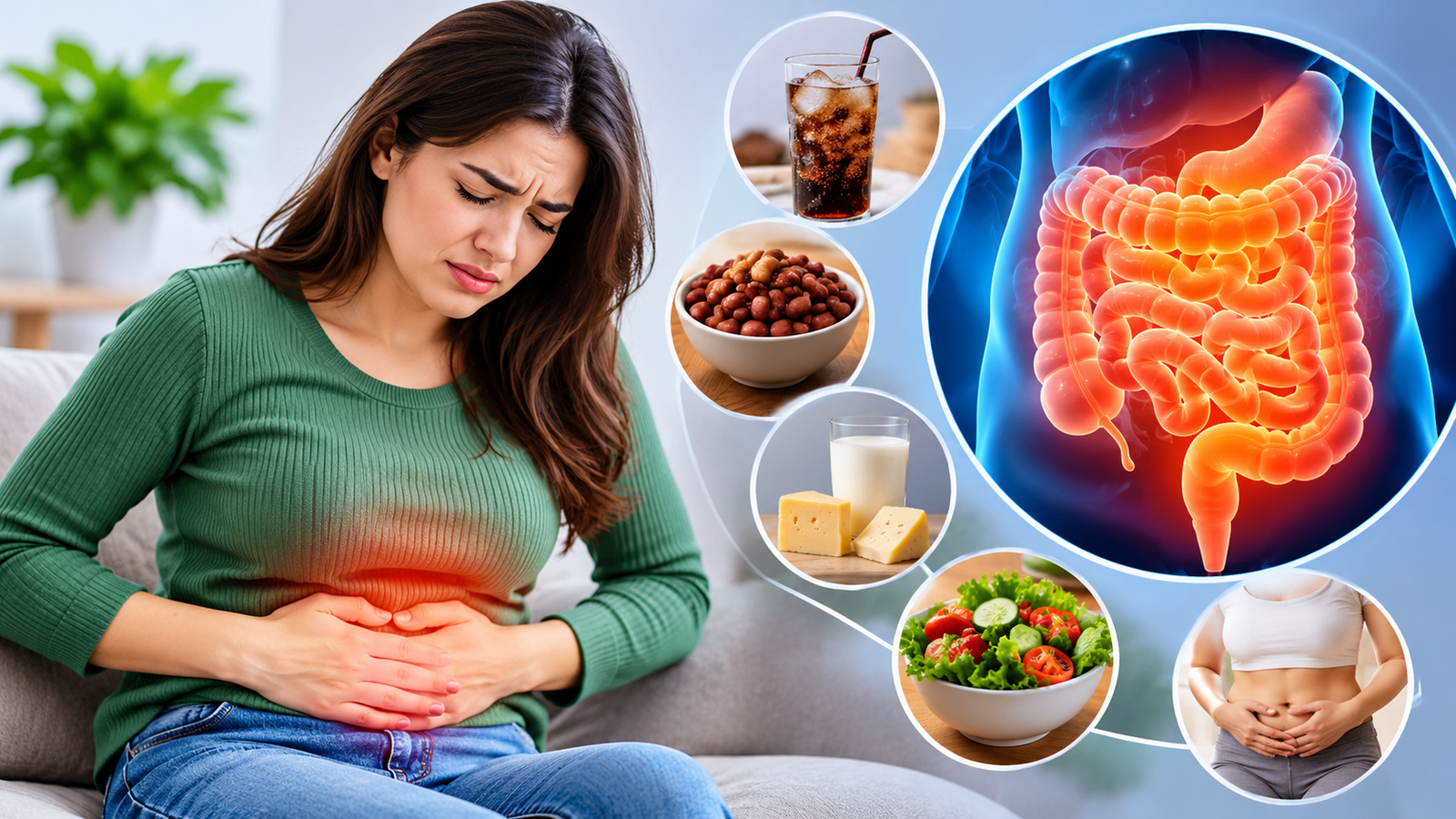
Feeling puffed up after a meal is very common. Guts UK says around four in ten people get bloating at times. Most of the time it’s harmless. Here are the usual causes, the clues that point to each one, and the signs that mean it’s time to get help.
What’s the difference between bloating and distension?
People use one word for two things. Bloating is a feeling: your tummy feels full, tight, or under pressure. Distension is what you can see: your waist actually gets bigger.
You can have one or both. Guts UK says half of people with bloating have no visible swelling. Many people are flat in the morning and bigger by evening, as meals add up through the day. It matters because the fix depends on which one you have.
1. You swallow air as you eat.
Air goes down with every bite. Eating fast, talking while you eat, chewing gum, using straws, and drinking fizzy drinks all add more. Some people also gulp air when they feel anxious.
Try this: slow down and chew with your mouth closed, as the NHS advises.
2. Gas-producing foods and FODMAPs
The NHS says the most common reason for bloating is a lot of gas in the gut. Some vegetables and fizzy drinks are common triggers. Cabbage, beans, and lentils are the usual suspects. They’re healthy foods, so don’t ban them. Just watch how much you eat in one sitting.
Fruit, vegetables, milk, pulses, and wheat also contain fermentable carbs called FODMAPs. In sensitive people, gut bacteria turn these into extra gas. A low-FODMAP diet can help people with IBS. But it’s complex, so Guts UK says to do it with a registered dietitian.
3. Big, fatty, or late meals
A large plate gives your gut more to handle. The NHS advises against big meals late at night and against lots of processed, sugary, spicy, or fatty food. The charity IFFGD adds that after-meal bloating is more obvious with large, fatty meals. Smaller, more frequent meals can help.
4. Constipation
When stool backs up, your tummy can feel tight and full. If that’s the cause, the NHS suggests soluble fiber such as oats or linseed. A pharmacist can also advise on laxatives.
5. Food intolerance or celiac disease
With lactose intolerance, your body lacks the enzyme that digests milk sugar. The sugar reaches your large intestine, where bacteria ferment it. The result is bloating, wind, and discomfort, says the British Nutrition Foundation.
Coeliac disease is different. It’s an immune reaction to gluten, and bloating can be its main sign. If you suspect it, keep eating gluten and ask your GP for a test first. Cutting it out too early can affect the results.
6. IBS and a sensitive gut
IBS can cause bloating along with tummy pain, diarrhea, or constipation. Some people simply have a more sensitive gut, so small changes inside feel big. According to Guts UK, doctors call bloating “functional” when it lasts at least three months and no other disease explains it.
7. Your diaphragm and belly muscles are out of sync.
This is the cause most articles skip.
Normally, when your gut fills up, your diaphragm relaxes and your belly wall muscles gently tighten. Your tummy stays flat. In some people the opposite happens. The diaphragm tightens and moves down, the belly wall relaxes, and your gut contents get pushed forward. Your belly bulges. This is called abdomino-phrenic dyssynergia.
Research backs this up. In a 2019 study, people who blamed lettuce for their bloating had CT scans. They had no real rise in gut gas. Their scans showed the muscle pattern instead. So gas isn’t always the villain.
The treatment is retraining, not dieting. Trials of biofeedback exercises have shown benefit, and Guts UK says pelvic floor biofeedback can cut symptoms in half. It can be hard to get. If diet changes haven’t helped, ask your GP about it.
Quick clue guide
| What you notice | A possible cause (not a diagnosis) |
| Burping, rushed meals, fizzy drinks | Swallowed air |
| Hard, infrequent poos | Constipation |
| Symptoms after milk or dairy | Lactose intolerance |
| Bloating with pain and bowel changes | IBS |
| Flat in the morning, bigger by evening | Functional bloating or muscle coordination |
What helps
These tips come from the NHS:
- Eat smaller, more frequent meals.
- Walk or exercise regularly.
- Drink plenty of water. Go easy on fizzy drinks, alcohol, and caffeine.
- Sit up straight when you eat.
- Gently massage your tummy from right to left to move trapped wind.
- Ask a pharmacist about simeticone, which can ease bloating.
A simple food and symptom diary kept for two weeks can also show your patterns.
When should you see a doctor?
See a GP if you feel bloated regularly, you’ve changed your diet but still feel bloated, you’re losing weight without trying, or you see blood in your poo.
The NHS says to ask for an urgent GP appointment or call 111 if bloating comes with being sick, diarrhoea or constipation, a stomach ache, a high temperature, a lump or swelling in your tummy, or if you can’t pee, poo or fart.
Call 999 or go to A&E if you have a swollen stomach with sudden, severe stomach pain, vomiting blood (or vomit that looks like coffee grounds), or severe trouble breathing.
Bloating that doesn’t go away can occasionally be a sign of ovarian cancer. If you have ovaries and bloating keeps coming back, tell your GP. Guts UK says a simple blood test can be arranged.
FAQs
Is it normal to bloat after every meal?
Occasional bloating is common. But the NHS says to see a GP if you feel bloated regularly or diet changes haven’t worked.
Can bloating be something other than gas?
Yes. Research shows some bloating and belly swelling comes from the diaphragm and belly muscles working out of step, not from extra gas.
Should I try a low-FODMAP diet?
Only with a registered dietitian. It can help people with IBS, but it’s complex. Your GP can refer you to an NHS dietitian.
The bottom line
Bloating after eating usually comes from simple things: swallowed air, fizzy drinks, big meals, or constipation. Try the easy fixes first. If it keeps coming back, don’t guess. Speak to a pharmacist or your GP.