Sleep Apnea Symptoms: 12 Signs You Shouldn’t Ignore

The short answer: The main sleep apnea symptoms are loud snoring, pauses in breathing, gasping or choking at night, and heavy tiredness in the day. Many people never notice the night signs, so daytime clues matter just as much.
What is sleep apnea?
Sleep apnea (also spelt sleep apnoea in the UK) means your breathing keeps stopping and starting while you sleep. Each pause can last several seconds. Your brain wakes you just enough to restart breathing, often without you remembering it.
The result is a night of broken sleep, even if you were in bed for eight hours.
Nighttime symptoms
These are often spotted by a partner, not by you.
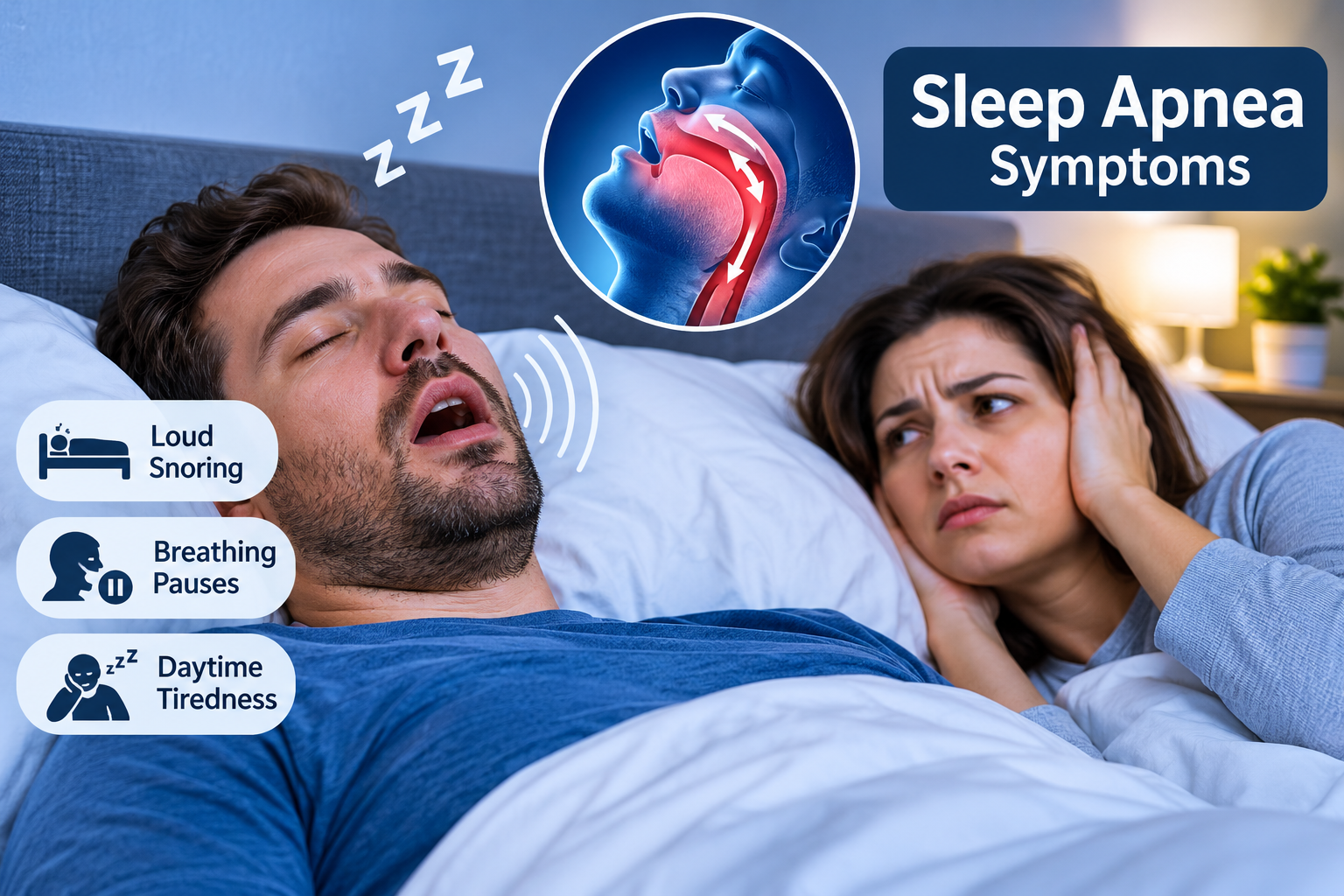
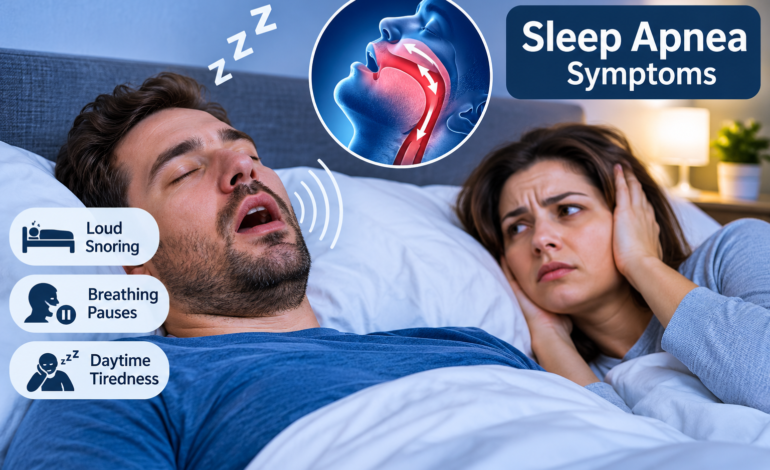
- Loud, regular snoring. It is the best-known sign. Snoring alone doesn’t mean you have sleep apnea, though.
- Pauses in breathing. A partner may see you go quiet, then restart with a snort.
- Gasping or choking. You may sit up suddenly, feeling short of breath.
- Restless sleep. Lots of tossing, turning and waking.
- Frequent toilet trips. Waking up to pee more than once a night can be linked to broken sleep.
- Night sweats and a dry mouth. Mouth breathing dries your throat.
Snoring vs sleep apnea: Plain snoring is steady. Sleep apnea snoring is often loud, then silent, then followed by a gasp. The silence is the warning sign.
Daytime symptoms
If you sleep alone, start here.
- Heavy sleepiness. You nod off while watching TV, reading or sitting in traffic.
- Morning headaches. They tend to fade within an hour or two of waking.
- Poor focus and foggy memory. You lose your train of thought mid-task.
- Mood changes. Irritability, low mood and short temper are common.
- Waking unrefreshed. You feel just as tired as when you went to bed.
- Low sex drive. Poor sleep can lower interest in sex.
Tiredness and sleepiness are not the same thing. Fatigue is feeling worn out. Sleepiness is feeling like you could drop off at any moment. Sleep apnea is more about the second.
Do symptoms differ in men, women and children?
Men often have the classic loud snoring and witnessed pauses.
Women may have quieter symptoms. Morning headaches, low mood, poor sleep and constant tiredness can all appear without much snoring. This is one reason it gets missed or mistaken for stress or hormones.
Children can show it differently. Look for mouth breathing, restless sleep, bedwetting, and trouble concentrating or behaving at school. Hyperactivity can sometimes be a sign, not just tiredness.
Mild vs severe: how symptoms change
| Level | What you might notice |
| Mild | Snoring, occasional tiredness, mild headaches |
| Moderate | Daily sleepiness, mood changes, partner sees pauses |
| Severe | Falling asleep at work or while driving, frequent gasping, high blood pressure |
Symptoms alone can’t tell you how severe it is. Only a sleep test can.
Quick self-check
Say yes or no to each:
- Do I snore loudly?
- Has anyone seen me stop breathing in my sleep?
- Do I feel very tired most days?
- Do I wake with a headache?
- Do I have high blood pressure?
Two or more “yes” answers are worth a chat with your GP.
When should you see a doctor?
The NHS advises seeing a GP if your breathing stops and starts in your sleep, you gasp, snort or choke, or you always feel very tired in the day. If someone has seen your symptoms, bring them along.
Get urgent help (call 999) for chest pain, fainting or sudden weakness. These are not typical sleep apnea symptoms and need emergency care.
Driving: Drowsy driving is dangerous. If you’re falling asleep at the wheel, stop driving and speak to your GP. If you’ve been diagnosed, the NHS says you may need to tell the DVLA.
How common is it in the UK?
NICE has reported that it affects up to 4% of middle-aged men and 2% of middle-aged women in the UK. Other estimates are higher, and around 85% of cases may go undiagnosed. You are not alone, and it is treatable.
FAQs
What are the first signs of sleep apnea?
Loud snoring and daytime sleepiness are usually the first. Partners often notice the snoring and pauses before you do.
Can you have sleep apnea without snoring?
Yes. It is less common, but it can happen, especially in women. Morning headaches and constant tiredness may be the only clues.
Can sleep apnea go away on its own?
Rarely. Weight loss, less alcohol and side sleeping can ease it, but you should still get checked.
What does a sleep apnea episode feel like?
Most people don’t feel it. If you do, it can feel like a sudden jolt, with a racing heart and a gasp for air.
Is daytime sleepiness always a sign of sleep apnea?
No. Poor habits, stress and other conditions can also cause it. Persistent sleepiness is a good reason to see a GP and rule things out.
The bottom line
Sleep apnea hides well. Snoring is only one clue, and many people notice daytime tiredness, morning headaches or a foggy mind first. If two or more symptoms sound familiar, book a visit with your GP. It is treatable, and getting checked is the first step.