
How Outsource SEO Services Can Solve Your Website’s Ranking Problems

A site may have a solid product, a helpful service, and clear pages, but it can still fall short on Google. I keep running into this. Owners put up blog posts, sprinkle in keywords, and add some links. Then they sit back and hope search traffic shows up. Weeks turn into months, and the page positions do not change much.
The problem often does not come from a lack of effort. It comes from using the wrong SEO process.
Based on what I found, organic search is still a big driver of visits. BrightEdge reported in its channel-share review that organic search made up around 53.3% of the website traffic it could track. That makes search visibility difficult to ignore.
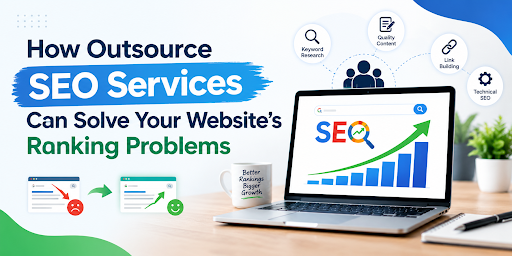
Outsource SEO services can take care of this. If a company does not want to depend on a single internal team for every SEO task, it can use outside help. These outside specialists can handle technical SEO, writing and editing tasks, link work, keyword research, and ongoing checks of performance.
The Real Problem Behind Poor Rankings
When I see a site that is not ranking, I do not jump to the conclusion that the content is bad.
First, a search engine has to figure out what the site is about. Only then can it decide whether to show the pages. A lack of rankings can come from other issues too. For example, pages can load slowly. Links can be broken. Internal links can be messy or missing. Duplicate text can show up on multiple pages. The page layout can be weak. Some pages may not get indexed at all. And the content might not fit what people are trying to find.
As I found over research, Google continues to update its search systems and documentation. Google has also made clear that helpful content became part of its core ranking systems rather than remaining a separate system.
This means businesses cannot depend on old SEO tricks.
Stuffing a keyword into a page will not solve a technical problem. Publishing 50 short blogs will not automatically create authority. Building random backlinks will not replace useful content.
A proper SEO strategy needs to look at the entire website.
How Outsource SEO Services Find Ranking Problems
When you outsource SEO, the first useful step should be an audit.
An effective SEO team would be able to audit the website for technical configuration, keywords used, writing skills, external linking, internal linking, title tags and descriptions, speed, indexing, and competition strategies.
This makes sense since most owners will see what is displayed on the screen, but they will not necessarily understand why it was displayed that way.
For example, a company may notice that an important service page sits on page three of Google. The owner might choose to write one more post for the same keyword. Still, an SEO audit can reveal a couple of problems. For example, Google may struggle to crawl the service page. It can also show that multiple pages are trying to rank for the same search term.
Fixing the actual problem can produce a better result than simply creating more content.
Why Technical SEO Needs Specialist Attention
Technical SEO can seem easy at first glance.
But when a site gets bigger, the work usually grows into something more tangled.
A technical SEO specialist checks a set of key areas.
Their considerations are crawl access, page indexing process, redirect implementation, and proper implementation of canonical tags. In addition, they validate the XML sitemap, structured data, mobile usability, and page loading speed.
The structure of the website is also important, particularly its linking structure. making content understandable, and helping Google discover important pages.
This is one reason outsourcing can work well. You get access to someone who spends their working time solving these specific problems instead of expecting a general marketing employee to manage everything.
Content Alone Cannot Fix Every SEO Problem
Content is still key, but I would not call it the whole SEO plan. A good site shares content that answers questions real visitors ask. Furthermore, it must meet the needs of the user searching for something by typing it into the search box. In addition to this, the website also needs correct internal links on the website, proper web design, good technical configuration, and authority on the subject.
A large Backlinko study looked at over four million Google search results. In that review, the top organic listing got about a 27.6% click-through rate on average. It also showed that the result in rank one was around ten times more likely to get a click than the page in position ten.
That data shows why rankings matter. Moving from page three to page one can change the amount of attention a website receives.
But getting there requires more than repeating the target keyword.
Where White Label PPC Services Fit In
SEO takes time. Paid advertising can provide another way to reach potential customers while organic rankings develop.
This explains why agencies often combine SEO with white label ppc agency. A marketing agency can use a specialist PPC provider behind the scenes while presenting the service under its own brand.
I see this as useful when an agency wants to offer SEO and paid search without building a large PPC department internally.
For example, SEO can target long-term organic visibility while PPC can target important commercial searches immediately. The two channels can also provide useful search data. PPC results can reveal which keywords bring clicks and sales. Those results can help SEO choose better terms for organic traffic. This does not mean a company should just increase ad spending without checking.The goal should remain profitable customer acquisition.
A Simple Case Study From Search Data
A service site gets a lot of visitors from branded searches. But it does not pull in many people who have not heard of the business yet.
Start by checking Search Console. Look at what users searched, which pages they reached, and which queries bring results. Also review landing pages, any technical problems, and what rival sites are doing.
Suppose the site ranks around positions 20–30 for several valuable service keywords. The pages have useful info, but the match to search intent is not strong. The site also has weak internal links. On top of that, there are technical problems that can slow crawling.
They do not need to post 100 fresh articles. The better move is to work on the service pages already live. That means fixing the technical issues, improving internal linking, and refreshing content that is out of date. It also helps to grow site authority in topics that matter.
After changes, I would track impressions, clicks, rank movement, organic conversions, and revenue.
The Backlinko research gives us another useful benchmark: moving up one position increased relative click-through rate by an average of 32.3%, although the impact varied by position.
This shows why SEO teams should focus on measurable movement rather than simply reporting that they published more content.
Why Outsourcing Can Become the Better Long-Term Choice
Trying to hire just one person to do technical SEO, content planning, link building, analytics, keyword research, and PPC is usually a lot for a single role. It can turn into an overload pretty fast.
Outsourcing gives a business access to multiple areas of expertise without necessarily hiring several full-time employees.
My notes from this topic say that search keeps shifting as AI adds new features and new ways to find things. BrightEdge reported in 2024 that referrals from AI search tools went up a lot. Even so, regular organic search did not go away. It still drives meaningful traffic.
So SEO is not just about adding more pages. SEO groups will need to watch how a site works day to day. They must figure out what visitors want and then test if the content actually answers those needs. Beyond that, they have to manage structured data. They also need to look at how people behave on the site. And they should pay attention to both regular search results and the newer AI paths that show results.
That makes specialist knowledge more valuable.
The Future of Content Writing Is Not Just More Content
I think the next content writer will have to act more like a researcher.
A writer will need to get who the audience is. They should also look at what people are trying to find. Facts still must be checked. Sources have to be dependable. Many tasks also need to fit with SEO staff. The work should guide readers and support the choices they are trying to make.
AI may help make first drafts quicker. Still, faster writing does not automatically build belief. Companies have to keep things correct. They also need real input, good examples, and explanations that are easy to follow.
As per my experience, readers can quickly notice when an article only repeats information found on ten other websites.
The better approach involves combining human experience with data and SEO expertise.
Final Thoughts
Ranking problems rarely come from one single mistake. They usually come from several small problems working together.
That is why outsource SEO services can be a workable option. A small expert team can look over your site, spot technical problems, clean them up, and improve what is on the pages. They can also help with better internal links, do keyword research, track what competitors do, and check real outcomes for the business.
A technical seo expert can handle the foundation, while content specialists can improve the information users see. At the same time, white label ppc services can help agencies provide paid search without building the entire operation internally.
As per data available, organic search still drives a significant share of website traffic, and ranking higher can produce a major difference in clicks.
For me, the future is clear: SEO will become less about publishing more pages and more about building websites that search engines can understand and users can trust.